


20 Aug An RV Owner’s Guide to Weight Distribution Hitches (And When You Actually Need One)
There’s a particular kind of freedom that comes with taking your home on the road in an RV. You can wake up somewhere completely new, change tomorrow’s plans on a whim, and let the road become part of the adventure. After more than 830,000 kilometres of travel, Chanel and Stevo have learned that the best road trips aren’t necessarily the ones with the most gear…they’re the ones where you know what you actually need.

And when you’re towing an RV, that distinction matters. A weight distribution hitch might sound like one more complicated piece of kit to add to an already crowded setup, but for the right rig, it can make a meaningful difference to stability, handling and confidence behind the wheel. So before you spend money on towing equipment you may not need, here’s what a weight distribution hitch actually does, when you need one, and how to make sure your setup is ready for the miles ahead.
What Does a Weight Distribution Hitch Actually Do?
A Weight Distribution Hitch (WDH) is a specialized towing system that uses heavy-duty, tensioned spring bars to leverage excess tongue weight off the rear of your tow vehicle. It helps redistribute tongue weight across the tow vehicle and trailer so the rig sits more level.
The RV community is growing rapidly, and many drivers are trying to navigate these hardware decisions. Around 16.9 million households in the U.S. are expressing a strong interest in buying one soon. However, pulling a heavy wheeled box at 65 mph can be nerve-wracking, especially for newbies. Some veterans recommend upgrading to heavier systems, like fifth-wheel hitches, to maximize weight distribution, control and security.


When Do You Need a Weight Distribution Hitch?
You need a WDH when your fully loaded trailer weighs more than 50% of your tow vehicle’s weight. It’s also a must if attaching your trailer causes your vehicle’s rear to sag. Here are other signs that your rig needs an RV weight distribution hitch to operate safely:
- Your tow vehicle’s rear end squats heavily under the hitch.
- Your headlights are pointing upward into the trees or blinding oncoming traffic because the vehicle’s front is lifting.
- Your steering wheel feels uncomfortably light or unresponsive.
- The trailer bounces excessively like a seesaw over uneven pavement.
Fine-Tuning Your Towing Hardware for Stability
If you’ve determined that your rig needs a hitch, the next step is to evaluate your equipment and address sway.
Assess Your Current RV Towing Setup
Open your vehicle’s owner’s manual and check its specific towing limits. Never guess based on Internet forums. Many automakers include strict towing limits and equipment requirements. For example, a half-ton truck might boast a maximum towing capacity of 10,000 pounds, but the manual might state that a WDH is required for any load over 5,000 pounds.
Check the sticker on your actual hitch receiver. It usually lists two separate weight limits. One is for the standard “weight-carrying,” while the other is the much higher capacity for “weight-distributing.”
Improve the RV Sway Control
RV sway control is the mechanical resistance added to your towing setup to stop your trailer from acting like a dangerous pendulum behind your vehicle. Imagine you’re cruising along when a massive 18-wheeler suddenly passes by. The sudden blast of air pushes your trailer sideways. Without sway control, the sideways push transfers directly to your steering wheel, pulling you out of your lane.
Many modern weight distribution systems feature built-in sway control using friction brackets or dual-cam designs. These act like stiff hinges to keep the trailer tracking straight, even in high winds.
Understanding Proper Trailer Weight and Balance
You achieve proper trailer balance when most of your cargo weight sits securely ahead of the trailer’s axles. This creates the correct amount of downward pressure or tongue weight on the hitch.
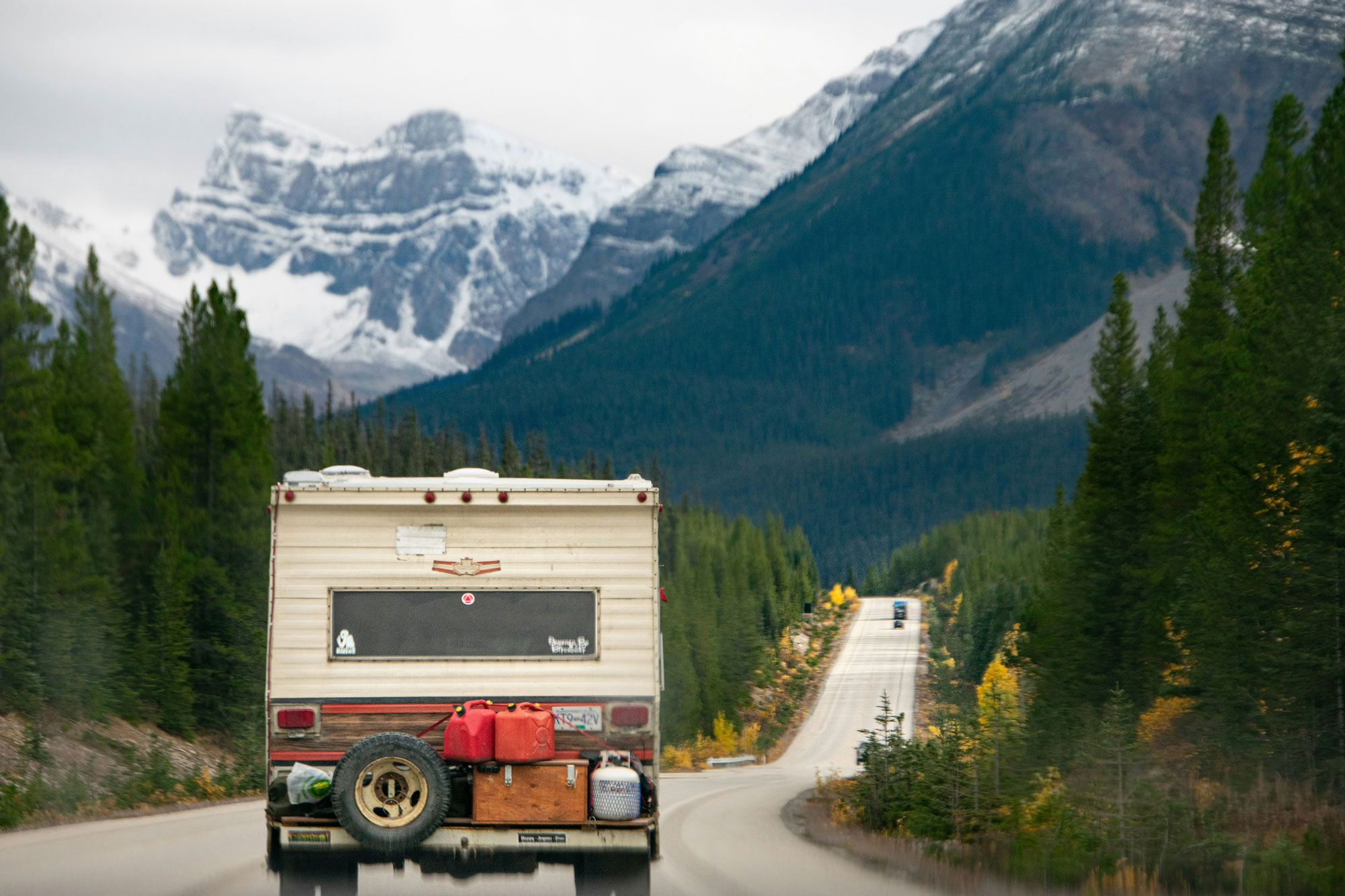
Strategic cargo placement helps distribute weight evenly. For interior loading, keep roughly 60% of the cargo weight positioned in front of the trailer’s axle to prevent sway. That means storing heavy toolboxes, generators, freshwater jugs and other hefty gear in the front storage compartments.
Keep your layout balanced and your rig stable by loading 40% of your cargo in the back. Packing lightweight items, such as clothes and bedding, in the rear ensures you don’t build a dangerous pendulum effect.
Choosing a Weight Distribution Hitch for Your RV Needs
To choose the right WDH for your RV setup, base your purchase on your rig’s fully loaded tongue weight. Imagine buying a hitch rated for a 500-pound tongue weight based on your trailer’s shiny dealership brochure. Then, you load up your gear, fill the water tanks and strap on the propane bottles. This bumps your actual weight to 750 pounds, which would make the hitch underrated and ineffective.
Your towing system is a chain of several parts, from the truck and receiver to the ball and the hitch. Whatever hardware you buy, the hitch should match the vehicle’s strength to ensure it doesn’t snap or fail under heavy loads. Remember that you’re only as safe as the weakest link in your chain, so always double-check weight ratings on all components before finalizing your setup.
Mastering Safe RV Towing on the Open Road
Safe RV towing comes down to adjusting your driving habits to account for your rig’s increased length, weight and braking distance. Picture pulling onto the highway with your perfectly balanced ride. Suddenly, the car in front of you slams its brakes. Because you’re towing thousands of extra pounds, your vehicle will not stop as fast as it normally does, and you need to factor that into your response.

Remember that a WDH can level your ride, but it can never replace an attentive driver. Consider these essential driving tips to keep your rig safe:
- Leave a 4-second gap: Double your normal following distance to account for the increased momentum and stopping time.
- Take wider corners: Your trailer tracks inside your vehicle’s path, so you must swing wide to avoid clipping curbs or road signs.
- Don’t slam the tow vehicle’s brakes: If the trailer starts to sway, keep the steering wheel straight and let the rig slow down naturally.
- Limit your top speed: Driving fast increases the risk of sway and puts unnecessary strain on your towing components.
- Use your manual brake override: If you notice severe sways, use the manual slider on your electronic brake controller to apply only the trailer brakes.
Hit the Road With Confidence
The beauty of travelling by RV is that the road becomes part of the experience, not just the distance between two destinations. But that freedom is a whole lot more enjoyable when you trust the setup you’re driving.
A weight distribution hitch won’t make every towing situation effortless, and it certainly can’t replace good judgement behind the wheel. What it can do is help create a more balanced, controlled rig when your vehicle and trailer call for it. Take the time to understand your weights, check your equipment and practise before tackling the big adventure.
Because after all those kilometres they’ve driven, one thing Chanel and Stevo have learned is that confidence on the road doesn’t come from having more gear. It comes from knowing your setup, knowing your limits, and being prepared for whatever the next turn brings. Then you can get back to the best part: pointing the vehicle somewhere interesting and seeing where the road takes you.
Author bio: Jack Shaw is a freelance lifestyle writer and dedicated traveler. His writing focuses on exploring the food, culture and beautiful views of wherever life decides to throw him. Stories of his travels can be seen in Modded, Trekaroo, The Travel Magazine and more. Jack has a love of all things outdoors, and spends much of his free time taking on local hiking trails and state parks.
If you enjoyed this post, you may want to follow Chanel & Stevo’s journey on Instagram, YouTube, TikTok, and Pinterest, browse through the HFFH Shop, or check out some other popular articles on the blog.
Disclaimer: some links in this blog post may be sponsored or affiliate links, meaning that we receive a small percentage (at no extra cost to you) if you end up buying through the link. We appreciate the support! You can read our full privacy policy here.

No Comments